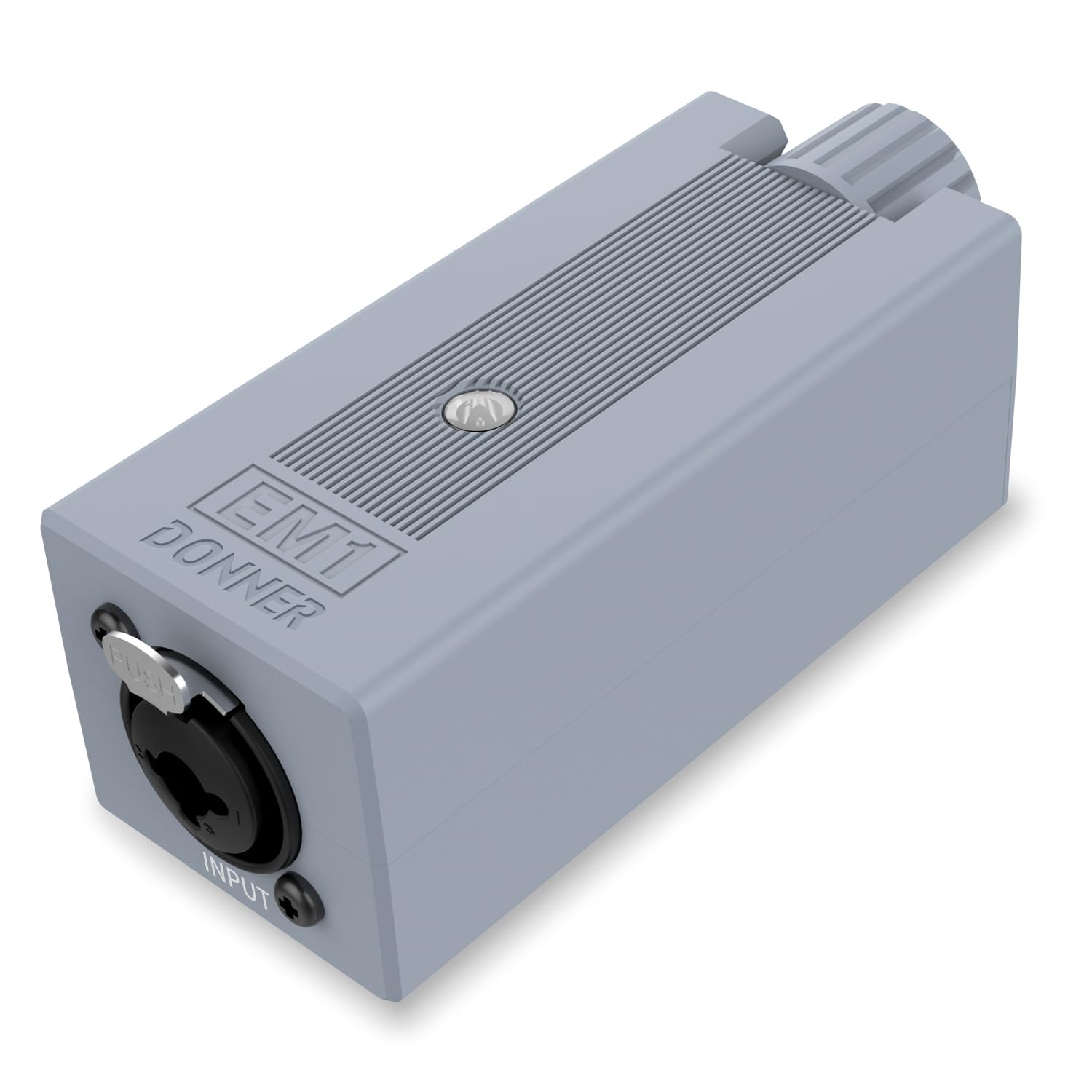
The Donner EM1 is a rechargeable personal in-ear monitor amplifier designed to bring a wired monitor signal to headphones or earphones in a portable belt-pack format.
This Donner EM1 review looks at its input options, stereo/mono switch, battery life claim, and the setup choices that matter before buying.
Donner EM1 Review Summary
The quick verdict
800+ ratings
Read Amazon ReviewsDonner EM1
A compact rechargeable monitor amp for musicians who want a belt-pack headphone feed with XLR or TRS input and simple level control.
- XLR and TRS input connectors with a locking mechanism.
- 3.5 mm headphone output for connecting headphones or earphones.
- Stereo/mono source switch intended to accommodate different cable connections.
- Rechargeable Li-ion battery with up to 12 hours of operating time.

Pros
- XLR and TRS inputs give buyers flexibility for connecting compatible monitor sources.
- Locking input connectors can help keep a connected cable secured during movement.
Consider before buying
- It does not support microphone input, so it cannot serve as a mic preamp.
- The stereo/mono switch and cabling need to match the source connection; buyers should check their signal path before ordering.
Read the full review summary
The EM1 focuses on a practical stage-monitoring job: connect a compatible source through XLR or TRS, attach headphones through its 3.5 mm output, and carry the amp on a belt clip.
Its locking input connector design and stereo/mono source switch give it some useful flexibility for personal monitoring setups, while the rechargeable battery avoids making disposable batteries part of the routine.
It may suit performers who need a compact headphone feed and can confirm that their mixer or monitor output, cabling, and headphones fit the EM1's connections.
The description calls out high-impedance professional headphones and up to 12 hours of operation, but actual suitability depends on the complete signal chain and how loudly and how long the unit is used.
It does not support a microphone, so it is not a microphone preamp or a complete wireless monitoring system.
The buying factors
Donner EM1 Scorecard
Editorial scores reflect listed features and buyer fit; they are not laboratory measurements or customer ratings.
Portable design
The compact format and metallic belt-pack clip are aimed at carrying the amp during use.
Input flexibility
XLR and TRS input connectors support more than one common wired connection type.
Monitoring options
A stereo/mono source switch adds a useful setup choice, though the right position depends on the source and cable connection.
Battery convenience
The rechargeable Li-ion battery is specified for up to 12 hours, which can reduce charging frequency for shorter sessions.
Headphone compatibility
The product is described as suitable for high-impedance professional headphones, but buyers should match their headphones and desired level to the source and amp.
Setup simplicity
The connection options and controls are straightforward in concept, but the stereo/mono setting and cable choice require attention.
Key Features and Specifications of Donner EM1
- XLR and TRS input connectors with a locking mechanism.
- 3.5 mm headphone output for connecting headphones or earphones.
- Stereo/mono source switch intended to accommodate different cable connections.
- Rechargeable Li-ion battery with up to 12 hours of operating time.
- Power and battery charging controls with LED indicators.
- Solid metallic belt-pack clip and compact portable design.
- Designed as a personal in-ear monitor amplifier; microphone use is not supported.
Pros and Cons of Donner EM1
Pros
- XLR and TRS inputs give buyers flexibility for connecting compatible monitor sources.
- Locking input connectors can help keep a connected cable secured during movement.
- The belt-pack clip and compact design suit portable personal monitoring.
- Rechargeable battery operation is specified for up to 12 hours.
Consider before buying
- It does not support microphone input, so it cannot serve as a mic preamp.
- The stereo/mono switch and cabling need to match the source connection; buyers should check their signal path before ordering.
- The description does not specify a universal headphone compatibility range, so confirm that the EM1 fits the headphones and monitoring level you need.
Who Should Buy Donner EM1?
Good fit
Consider the Donner EM1 if you want a small wired personal monitor amp that can attach to a belt and accept a compatible XLR or TRS feed.
Its rechargeable design, 3.5 mm headphone output, and stereo/mono selection cover the basic pieces of a portable monitoring setup without adding a large desktop unit.
Before buying, trace the signal from your mixer or monitor output to your headphones.
Confirm the output connector and cable arrangement, decide whether your setup calls for stereo or mono, and check that your headphones are appropriate for the amp.
Those checks are especially useful if you rely on high-impedance headphones or need a particular listening level.
The up-to-12-hour battery figure may be helpful for planning rehearsals or performance sessions, though charging habits and session length still matter. The EM1 makes the most sense when its wired connections and personal headphone role match your setup.
Who should skip it
Skip it if you need a microphone input, since microphone support is explicitly excluded from its design.
Look for a different approach if you need wireless freedom or a system that includes transmitters and receivers; this is a portable wired headphone amplifier, and the described features do not provide a wireless link.
Donner EM1 Review: What Its Portable Monitor Design Means
Match the input to your monitor feed
The EM1 accepts XLR and TRS inputs, with a locking mechanism on the connectors.
That gives it a practical range of wired connection types, but the cable and output on the mixer or monitor source still need to match.
Check the exact connection path before buying, particularly if your setup uses a less common adapter or routing arrangement.
Choose stereo or mono deliberately
The stereo/mono source switch is intended to adapt the amp to the cable connection. This matters because the source signal and the selected mode need to work together for monitoring to sound as intended.
Identify whether your feed is mono or stereo and follow the amp's setup guidance when connecting it.
Think about headphones and level needs
The product is described as having enough power for high-impedance professional headphones and for use in noisy surroundings. Those are design goals rather than a guarantee for every headphone or stage environment.
Buyers should consider their headphone requirements and desired listening level, and avoid assuming the amp will overcome every source or room limitation.
Plan charging around real sessions
The built-in Li-ion battery is specified for up to 12 hours, and LED indicators support power and charging control. The maximum runtime can help with planning, but it leaves room for variation in use.
For frequent or long sessions, establish a charging routine and check the indicator before relying on the amp.
Alternatives to Donner EM1
No alternative model is recommended here. Compare the connection type, monitoring format, and portability that matter to your setup before choosing another option.
Is Donner EM1 Worth It?
The Donner EM1 is worth considering for performers who need a portable wired headphone monitor amp with XLR or TRS input, a 3.5 mm output, a belt clip, and rechargeable operation.
Its feature set is aimed at personal monitoring rather than microphone amplification or wireless monitoring.
Check your source connection, stereo/mono needs, and headphone requirements before buying.
If those fit, the compact design and up-to-12-hour battery specification make the EM1 a plausible option for rehearsal and performance use; if your setup needs a microphone input or wireless operation, choose a product built for that job.
Your review at a glance
800+ ratings
Read Amazon ReviewsDonner EM1
A compact rechargeable monitor amp for musicians who want a belt-pack headphone feed with XLR or TRS input and simple level control.
- XLR and TRS input connectors with a locking mechanism.
- 3.5 mm headphone output for connecting headphones or earphones.
- Stereo/mono source switch intended to accommodate different cable connections.
- Rechargeable Li-ion battery with up to 12 hours of operating time.